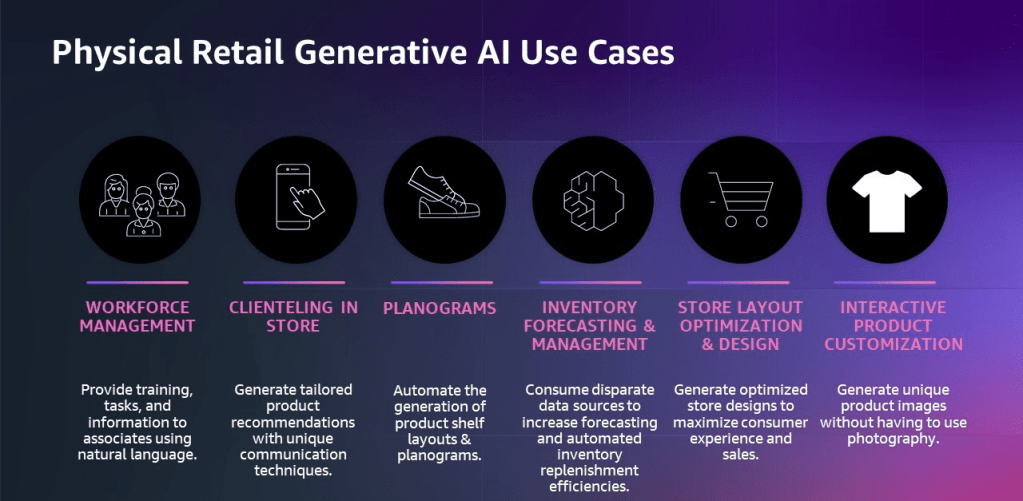
In the ever-evolving landscape of retail, the integration of generative AI platforms is becoming a game-changer. These platforms, powered by advanced artificial intelligence algorithms, are unlocking a myriad of possibilities for retailers. In this article, we will explore the diverse and transformative use cases of generative AI platforms in the retail sector, showcasing how they are redefining customer experiences, optimizing operations, and driving innovation.
I. Personalized Customer Experiences
1.1 Hyper-Personalized Recommendations
By analyzing vast datasets containing customer preferences, purchase history, and behavior patterns, generative AI platforms are redefining the art of recommendation engines in retail. Generative AI for retail platforms generate hyper-personalized product recommendations. This level of personalization goes beyond traditional collaborative filtering, taking into account contextual factors and real-time interactions. As a result, retailers can deliver suggestions that resonate more closely with individual customers, enhancing their shopping experience and increasing the likelihood of conversion.
1.2 Virtual Personal Shoppers
Taking personalization a step further, some generative AI platforms introduce virtual personal shoppers. These AI-driven assistants utilize natural language processing and machine learning to understand customer queries and preferences. By providing personalized guidance and recommendations, virtual personal shoppers simulate the in-store assistance experience in an online setting. This use case not only fosters a deeper connection between the brand and the customer but also streamlines the decision-making process for shoppers.
II. Visual Merchandising Excellence
2.1 AI-Generated Imagery
Generative AI platforms are transforming visual merchandising by automating the creation of high-quality product images. From apparel to home goods, AI algorithms generate lifelike visuals that showcase products in the best possible light. This use case not only reduces the reliance on costly photoshoots but also ensures a consistent and appealing presentation of products across digital platforms, enticing customers and driving engagement.
2.2 Augmented Reality (AR) Try-Ons
The integration of generative AI with augmented reality is shaping the future of online shopping. AR try-ons allow customers to virtually test products, such as clothing, accessories, or even furniture, in their own environment. By leveraging generative AI to create realistic simulations, retailers enable customers to make more confident purchase decisions. This use case bridges the gap between the digital and physical shopping experience, providing an immersive and interactive way for customers to engage with products.
III. Intelligent Inventory Management
3.1 Predictive Stock Levels
Generative AI platforms are optimizing inventory management through predictive analytics. By analyzing historical sales data, market trends, and external factors, these platforms forecast demand with remarkable accuracy. Retailers can proactively adjust stock levels, minimizing the risk of stockouts or overstock situations. This use case not only improves operational efficiency but also contributes to cost savings and a more agile supply chain.
3.2 Autonomous Reordering Systems
AI-driven autonomy is a key use case in inventory management. Generative AI platforms, equipped with sophisticated algorithms, continuously monitor stock levels and automatically trigger reorder processes when necessary. This autonomous approach reduces the manual workload on retailers, ensuring that products are restocked in a timely manner. The result is a streamlined and responsive inventory management system that adapts to fluctuations in demand.
IV. Conversational Commerce and Customer Support
4.1 AI-Powered Chatbots
Generative AI platforms play a crucial role in enhancing customer support through the deployment of AI-powered chatbots. These chatbots leverage natural language processing to understand and respond to customer inquiries in real-time. From product queries to order tracking, AI-powered chatbots provide immediate assistance, improving customer satisfaction and freeing up human resources for more complex tasks.
4.2 Multilingual Support
The global reach of retail demands multilingual support, and generative AI platforms rise to the occasion. By integrating language capabilities, AI-driven chatbots can communicate fluently in multiple languages, catering to a diverse customer base. This use case not only expands the accessibility of customer support but also contributes to a more inclusive and customer-centric retail experience.
V. Fraud Detection and Security
5.1 Anomaly Detection
Security is a paramount concern in retail, and generative AI platforms address this through advanced anomaly detection. By analyzing transactional data and user behavior, these platforms can identify irregular patterns indicative of fraudulent activities. The proactive nature of this use case allows retailers to thwart potential security threats before they escalate, safeguarding both customer information and the integrity of transactions.
5.2 Biometric Authentication
To fortify security measures, some generative AI platforms integrate biometric authentication methods. Whether through facial recognition, fingerprint scanning, or voice authentication, these technologies add an extra layer of protection to user accounts and transactions. This use case enhances the overall security posture of retail operations, instilling confidence in customers regarding the safety of their personal information.
VI. Real-time Pricing Optimization
6.1 Dynamic Pricing Strategies
Generative AI platforms contribute to pricing optimization through the implementation of dynamic pricing strategies. By analyzing real-time market data, competitor pricing, and customer behavior, these platforms adjust prices dynamically. Retailers can maximize revenue by setting optimal prices based on demand fluctuations, inventory levels, and other relevant factors. This use case allows retailers to stay competitive while maintaining profitability.
6.2 Competitor Price Monitoring
Staying abreast of competitor pricing strategies is essential for retail success. Generative AI platforms automate competitor price monitoring, continuously tracking and analyzing pricing trends in the market. Retailers can leverage this information to adjust their own pricing strategies strategically, ensuring they remain competitive within their industry. This use case empowers retailers to make data-driven decisions that align with market dynamics.
VII. Integration with Emerging Technologies
7.1 Internet of Things (IoT) Integration
Generative AI platforms are increasingly integrating with the Internet of Things (IoT) to collect real-time data from physical retail spaces. This data includes insights into foot traffic, dwell times, and customer interactions with products. By leveraging IoT integration, retailers gain valuable insights into customer behavior, enabling them to optimize store layouts, enhance product placements, and improve the overall in-store experience.
7.2 Augmented Reality (AR) and Virtual Reality (VR) Experiences
To bridge the gap between online and offline retail experiences, some generative AI platforms incorporate AR and VR technologies. These immersive experiences allow customers to virtually try on products, visualize furniture in their homes, or experience a virtual walk-through of a store. By offering interactive and engaging experiences, retailers can capture customer attention and differentiate themselves in a competitive market.
VIII. Data Analytics and Insights
8.1 Predictive Analytics
Generative AI platforms harness the power of predictive analytics to forecast future trends and behaviors. By analyzing historical data and identifying patterns, retailers can make data-driven decisions, anticipate customer preferences, and stay ahead of market trends. Predictive analytics also empower retailers to proactively address challenges and capitalize on emerging opportunities.
8.2 Customer Journey Mapping
Understanding the customer journey is essential for retailers looking to optimize the shopping experience. Generative AI platforms facilitate customer journey mapping by analyzing touchpoints across various channels. This comprehensive view enables retailers to identify pain points, streamline the purchase process, and create a seamless and enjoyable customer experience.
Conclusion
Generative AI platforms are proving to be invaluable across a spectrum of use cases in the retail sector. From elevating personalized customer experiences to optimizing complex inventory management systems, these platforms are driving innovation and efficiency. As technology continues to advance, the role of generative AI in retail will undoubtedly expand, opening new horizons for creativity, customer engagement, and operational excellence. Retailers embracing these transformative technologies are well-positioned to thrive in a dynamic and competitive market, delivering exceptional value to their customers and staying at the forefront of industry trends.
 Future of AI
Leave a comment