In the realm of artificial intelligence (AI) and machine learning (ML), data annotation serves as the bedrock for training robust and accurate models. A data annotation company plays a pivotal role in this process, employing various annotation techniques to label data effectively. In this comprehensive guide, we delve into the world of data annotation techniques, focusing on methods such as bounding boxes, 3D cuboid annotation, landmark annotation, skeletal annotation, and more.
Introduction to Data Annotation Company
A data annotation company specializes in providing high-quality annotated datasets to fuel AI and ML applications across industries. These companies leverage advanced annotation techniques and technologies to label diverse types of data, ranging from images and videos to text and audio.
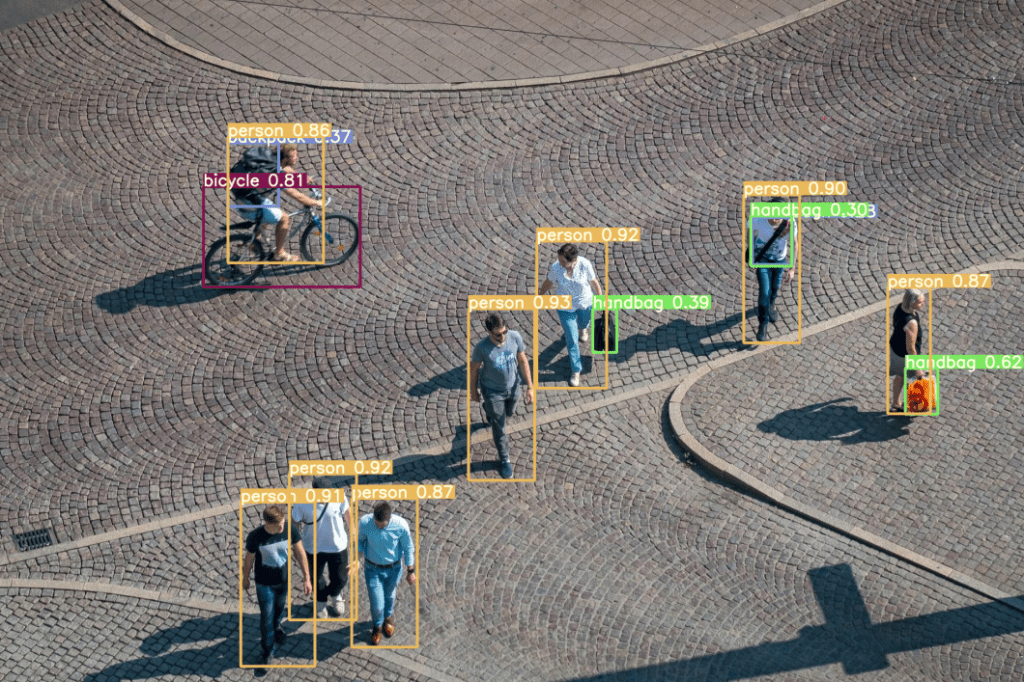
Bounding Box Annotation
Bounding box annotation is one of the fundamental techniques used by data annotation companies for object detection tasks. It involves drawing rectangular boxes around objects of interest within images or videos. This technique is widely used in applications such as autonomous vehicles, where objects like cars, pedestrians, and traffic signs need to be identified and localized accurately.
Applications of Bounding Box Annotation
- Object detection in autonomous vehicles
- Product recognition in e-commerce
- Animal detection in wildlife monitoring
3D Cuboid Annotation
3D cuboid annotation is a sophisticated technique employed by data annotation companies for annotating objects in three-dimensional space. It involves delineating objects with cuboid-shaped annotations, providing information about their size, orientation, and spatial relationship with other objects. This technique is essential for tasks like 3D object detection and localization in fields such as robotics, augmented reality (AR), and urban planning.
Applications of 3D Cuboid Annotation
- Autonomous navigation for drones and robots
- AR applications for spatial recognition
- Building reconstruction in urban planning
Landmark Annotation
Landmark annotation involves identifying and annotating specific points or landmarks within an object or image. These points serve as reference markers for understanding the structure, shape, and orientation of objects. Landmark annotation is commonly used in facial recognition, human pose estimation, and medical imaging applications.
Applications of Landmark Annotation
- Facial recognition and emotion detection
- Human pose estimation in sports analytics
- Anatomical landmark detection in medical imaging
Skeletal Annotation
Skeletal annotation entails annotating the skeletal structure or key joints within an object or organism. This technique is prevalent in applications such as motion capture, gait analysis, and biomechanics research. By annotating skeletal keypoints, data annotation companies enable AI models to understand and analyze movement patterns accurately.
Applications of Skeletal Annotation
- Motion capture for animation and gaming
- Gait analysis in healthcare and sports science
- Biomechanical research for injury prevention
Semantic Segmentation
Semantic segmentation is a pixel-level annotation technique used by data annotation companies to categorize each pixel within an image into predefined classes or categories. Unlike bounding box annotation, which provides object-level localization, semantic segmentation provides detailed pixel-level understanding of the image content. This technique is vital for tasks like scene understanding, image segmentation, and object recognition.
Applications of Semantic Segmentation
- Scene understanding in autonomous driving
- Medical image segmentation for tumor detection
- Environmental monitoring and land cover classification
Text Annotation
Text annotation involves labeling or tagging textual data with relevant information such as sentiment, intent, or named entities. Data annotation companies employ various text annotation techniques, including named entity recognition (NER), sentiment analysis, text classification, and part-of-speech tagging. Text annotation is crucial for natural language processing (NLP) tasks such as chatbots, text summarization, and information extraction.
Applications of Text Annotation
- Named entity recognition in information extraction
- Sentiment analysis for social media monitoring
- Text classification for document categorization
Audio Annotation
Audio annotation encompasses transcribing spoken words or annotating audio signals to extract meaningful information. Data annotation companies utilize techniques such as speech-to-text transcription, speaker diarization, emotion recognition, and sound event detection. Audio annotation is essential for tasks like voice assistant technology, speech analytics, and audio content indexing.
Applications of Audio Annotation
- Speech recognition for virtual assistants
- Emotion detection in customer service analytics
- Audio content indexing for podcast platforms
Conclusion
Data annotation companies play a crucial role in labeling data effectively for AI and ML applications. By employing a diverse range of annotation techniques such as bounding boxes, 3D cuboid annotation, landmark annotation, skeletal annotation, semantic segmentation, text annotation, and audio annotation, these companies enable the development of robust and accurate AI models across various industries.
In summary, the proficiency and expertise of a data annotation company in utilizing different annotation techniques are instrumental in generating high-quality annotated datasets, paving the way for advancements in AI and ML technologies. As AI continues to evolve, data annotation companies will remain at the forefront, driving innovation and empowering AI-powered solutions to tackle complex real-world challenges.
 Future of AI
Leave a comment