In today’s digital era, where users are inundated with vast amounts of content across various platforms, the need for personalized and relevant recommendations has become more critical than ever. Large Language Models (LLMs) have emerged as powerful tools to address this need, revolutionizing content discovery and engagement through sophisticated recommendation engines. In this comprehensive guide, we’ll explore the necessity and significance of LLM-powered recommendation engine, uncovering their transformative potential and benefits for users and businesses alike.
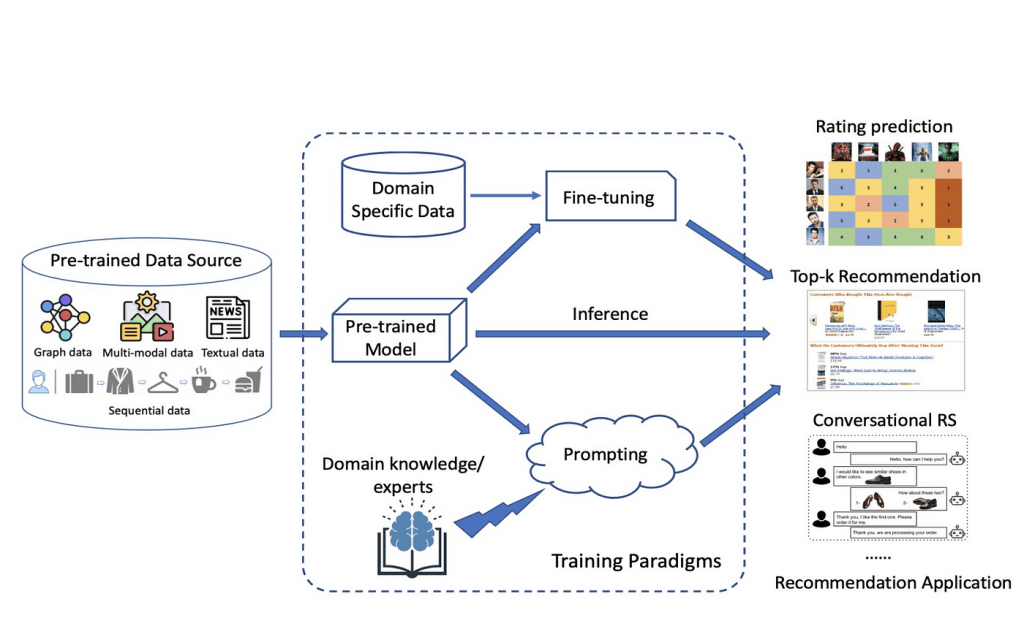
Understanding LLM-Powered Recommendation Engine
What is a Recommendation Engine?
An LLM-powered recommendation engine is an AI-powered system that analyzes user preferences, behavior, and context to generate personalized recommendations for content, products, or services. These recommendations are designed to help users discover relevant and engaging content tailored to their interests and preferences.
Introducing Large Language Models (LLMs)
LLMs, such as OpenAI’s GPT series, are advanced deep learning models trained on vast amounts of text data to understand and generate human-like text. These models excel at natural language understanding and generation, making them ideal candidates for powering recommendation engines.
The Need for LLM-Powered Recommendation Engines
Information Overload
In today’s digital landscape, users are bombarded with an overwhelming amount of content across various platforms. From articles and videos to products and services, the sheer volume of information makes it challenging for users to find content that aligns with their interests and preferences.
Personalization Demands
Modern users expect personalized experiences tailored to their individual interests and preferences. Generic, one-size-fits-all recommendations are no longer sufficient to meet the needs and expectations of today’s users, who seek content that is relevant, timely, and engaging.
Increasing Competition
With the proliferation of digital platforms and content creators, competition for users’ attention has never been fiercer. To stand out in a crowded marketplace, businesses must deliver personalized and compelling content experiences that capture users’ interest and keep them coming back for more.
The Importance of LLM-Powered Recommendation Engines
Hyper-Personalization
LLM-powered recommendation engines enable hyper-personalized content experiences tailored to individual user preferences, behaviors, and context. By analyzing user interactions and content metadata, LLMs can deliver recommendations that are highly relevant and engaging, leading to increased user satisfaction and retention.
Enhanced User Engagement
By providing personalized and contextually relevant recommendations, LLM-powered recommendation engines drive increased user engagement and interaction. Users are more likely to spend time on platforms that offer personalized recommendations that cater to their interests and needs, leading to longer sessions and higher satisfaction.
Improved Content Discovery
LLM-powered recommendation engines facilitate content discovery by surfacing relevant and diverse recommendations that users may not have discovered otherwise. This helps users explore new content, products, and services that align with their interests and preferences, leading to a richer and more satisfying user experience.
Benefits of LLM-Powered Recommendation Engines
1. Personalized Experiences
LLM-powered recommendation engines deliver personalized content experiences tailored to individual user preferences, behaviors, and context. This enhances user satisfaction and engagement by providing content that is relevant, timely, and tailored to their interests.
2. Increased User Engagement
By providing personalized and contextually relevant recommendations, LLM-powered recommendation engines drive increased user engagement and interaction. Users are more likely to spend time on platforms that offer personalized recommendations that cater to their interests and needs.
3. Higher Conversion Rates
LLM-powered recommendation engines can lead to higher conversion rates and sales for businesses by delivering personalized product recommendations tailored to individual user preferences and browsing history. This helps businesses maximize revenue and drive growth by guiding users towards products and services that align with their interests.
Considerations When Implementing LLM-Powered Recommendation Engines
1. Data Privacy and Security
Maintaining data privacy and security is paramount when implementing LLM-powered recommendation engines. It’s essential to implement robust security measures and data privacy controls to protect users’ sensitive information and ensure compliance with regulations such as GDPR and CCPA.
2. Bias and Fairness
LLMs are susceptible to biases present in the training data, which can result in biased recommendations. It’s important to mitigate bias and ensure fairness in recommendations by carefully curating training data and implementing bias detection and mitigation techniques.
3. Transparency and Explainability
Enhancing the transparency and explainability of LLM-powered recommendation engines is crucial for building user trust and understanding how recommendations are generated. Providing explanations and transparency into how recommendations are generated can help users understand and trust the recommendations.
Future Opportunities and Challenges
Opportunities
- Hyper-Personalization: LLM-powered recommendation engines enable hyper-personalized content experiences tailored to individual user preferences, leading to increased user satisfaction and engagement.
- Contextual Understanding: LLM-powered recommendation engines can understand context and incorporate it into the recommendation process, delivering recommendations that are relevant to the current situation or conversation.
Challenges
- Data Privacy: Maintaining data privacy and security is a challenge when implementing LLM-powered recommendation engines, requiring robust security measures and data privacy controls.
- Bias: LLM-powered recommendation engines are susceptible to biases present in the training data, necessitating careful curation of training data and implementation of bias detection and mitigation techniques.
Conclusion: Leveraging LLM-Powered Recommendation Engines for Success
In conclusion, the need for personalized and relevant content experiences has never been greater in today’s digital landscape. LLM-powered recommendation engines offer a powerful solution to this challenge by delivering hyper-personalized recommendations tailored to individual user preferences and context. By leveraging the transformative potential of LLMs, businesses can enhance user engagement, drive conversions, and stay ahead in a competitive marketplace. However, it’s essential to consider factors such as data privacy, bias, and fairness when implementing LLM-powered recommendation engines to ensure ethical and effective use. With careful consideration and implementation, LLM-powered recommendation engines can drive success and deliver value to users and businesses alike.
 Future of AI
Leave a comment