In the rapidly evolving landscape of manufacturing, artificial intelligence (AI) agents are poised to redefine production processes with unprecedented efficiency and innovation. These AI-powered agents, equipped with advanced machine learning algorithms and real-time data analytics capabilities, are set to transform traditional manufacturing paradigms. This article explores the future of AI agents in manufacturing, their potential applications, benefits, challenges, and the pivotal role they play in shaping the factories of tomorrow.
Introduction to AI Agents in Manufacturing
Understanding AI Agents
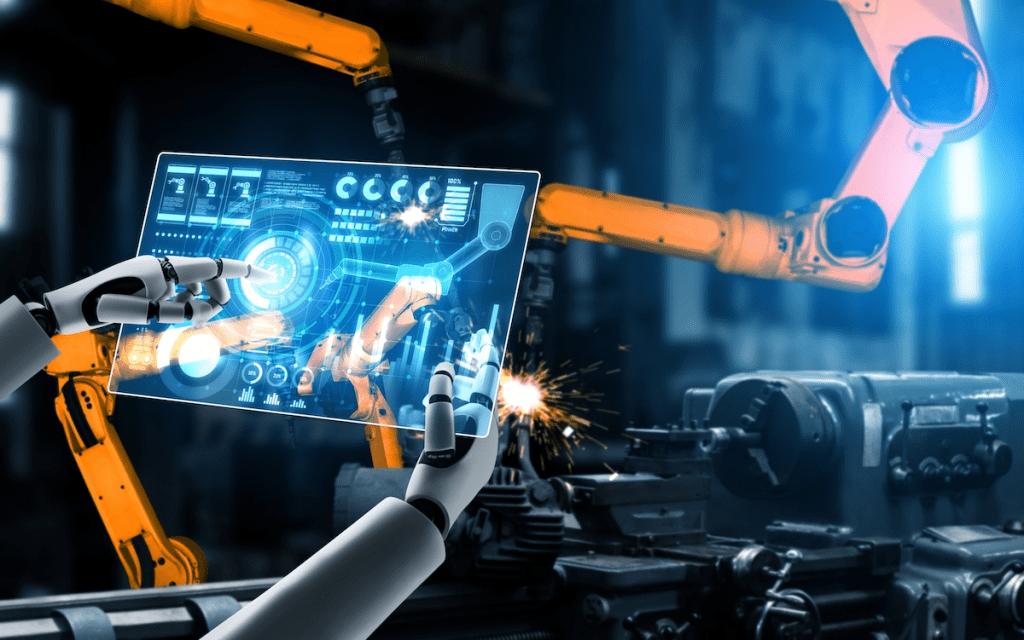
AI agents in manufacturing refer to intelligent systems embedded within production environments that autonomously perform tasks, make decisions, and optimize processes based on data-driven insights. Unlike traditional industrial robots, AI agents leverage cognitive computing and machine learning to adapt dynamically to changing conditions and demands.
The Evolution of Manufacturing
Manufacturing has undergone significant transformation over the decades, from mass production to lean manufacturing and now towards smart factories. The integration of AI agents marks the next phase in this evolution, promising enhanced flexibility, efficiency, and customization capabilities.
Key Technologies Driving AI Agents in Manufacturing
Machine Learning Algorithms
AI agents utilize machine learning algorithms to analyze vast amounts of production data, identify patterns, and predict outcomes. This enables predictive maintenance, quality control, and optimization of production schedules to minimize downtime and maximize output.
Internet of Things (IoT) Connectivity
IoT sensors and devices enable real-time data collection from machines, products, and processes within the manufacturing environment. AI agents leverage this data to monitor performance metrics, detect anomalies, and facilitate proactive decision-making.
Natural Language Processing (NLP)
NLP enables AI agents to interact with human operators, understand commands, and provide real-time feedback. This fosters seamless collaboration between AI systems and human workers, enhancing productivity and operational efficiency.
Applications of AI Agents in Manufacturing
Predictive Maintenance
AI agents analyze equipment sensor data to predict potential failures before they occur, enabling proactive maintenance and reducing unplanned downtime.
Quality Control and Inspection
AI-powered vision systems inspect products for defects with unparalleled accuracy, ensuring consistent quality and compliance with specifications.
Production Optimization
AI agents optimize production schedules based on demand forecasts, resource availability, and real-time market conditions, maximizing throughput and minimizing operational costs.
Supply Chain Management
AI agents enhance supply chain visibility and efficiency by optimizing inventory levels, predicting demand fluctuations, and identifying optimal shipping routes.
Human-Robot Collaboration
AI agents enable safe and efficient collaboration between human workers and industrial robots, enhancing ergonomics, productivity, and overall workplace safety.
Benefits of AI Agents in Manufacturing
Improved Efficiency and Productivity
AI agents streamline operations, reduce cycle times, and optimize resource utilization, leading to increased productivity and throughput.
Enhanced Quality and Compliance
AI-powered inspection systems ensure consistent product quality and compliance with regulatory standards, reducing rework and warranty costs.
Cost Savings and ROI
By minimizing downtime, optimizing energy usage, and reducing scrap rates, AI agents deliver substantial cost savings and accelerate return on investment (ROI).
Innovation and Agility
AI agents enable agile manufacturing processes that can quickly adapt to market changes, customer demands, and emerging technologies, fostering innovation and competitive advantage.
Challenges and Considerations
Data Security and Privacy
The integration of AI agents requires robust cybersecurity measures to protect sensitive production data and intellectual property from cyber threats and unauthorized access.
Workforce Adaptation and Training
The deployment of AI agents necessitates upskilling and training of the workforce to effectively collaborate with AI systems and leverage their capabilities.
Ethical and Social Implications
As AI agents assume more responsibilities in manufacturing, ethical considerations regarding job displacement, worker safety, and societal impact must be addressed through thoughtful policy and governance frameworks.
Future Trends in AI Agents for Manufacturing
Autonomous Decision-Making
AI agents will increasingly autonomously make decisions and adapt production processes in real-time based on predictive analytics and machine learning insights.
Cognitive Automation
Advancements in cognitive computing will enable AI agents to perform complex cognitive tasks traditionally performed by humans, such as planning, reasoning, and problem-solving.
Integration with Advanced Technologies
AI agents will integrate with emerging technologies like augmented reality (AR), virtual reality (VR), and blockchain to further enhance manufacturing efficiency, transparency, and traceability.
Conclusion
AI agents are set to revolutionize manufacturing by driving unprecedented levels of efficiency, flexibility, and innovation across production processes. As technology continues to evolve, AI agents will play a pivotal role in transforming traditional factories into smart, adaptive, and interconnected ecosystems. Embracing AI agents in manufacturing is not just a competitive advantage but a necessity for businesses aiming to thrive in the era of Industry 4.0. The future of manufacturing is intelligent, automated, and powered by AI agents.
In conclusion, AI agents in manufacturing represent the forefront of technological innovation, offering transformative capabilities that promise to reshape the industry’s landscape. As businesses continue to adopt and integrate these intelligent systems, the vision of fully autonomous, efficient, and agile manufacturing operations draws closer than ever before.
 Future of AI
Leave a comment