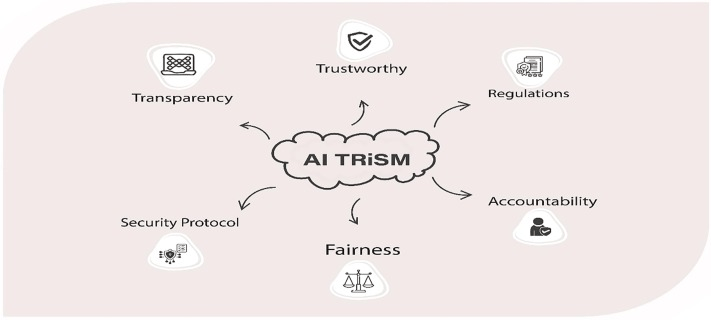
In the rapidly evolving world of artificial intelligence (AI), managing trust, risk, and security is crucial. The AI TRiSM Framework (AI Trust, Risk, and Security Management) offers a structured approach to address these challenges and ensure that AI systems are reliable, secure, and ethical. This article provides an in-depth exploration of the AI TRiSM Framework, highlighting its key components, implementation strategies, and future prospects.
Introduction to the AI TRiSM Framework
What is the AI TRiSM Framework?
The AI TRiSM Framework is a comprehensive governance and management model designed to address the core aspects of trust, risk, and security in AI systems. As AI technologies become more integrated into various sectors, the need for a robust framework to manage their complexities and challenges has become increasingly important. The AI TRiSM Framework provides a structured approach to ensure that AI systems are trustworthy, secure, and compliant with ethical and regulatory standards.
Why is the AI TRiSM Framework Important?
The significance of the AI TRiSM Framework lies in its ability to:
- Build Trust: Ensure AI systems are transparent, explainable, and fair, fostering confidence among users and stakeholders.
- Manage Risk: Identify and mitigate potential risks associated with AI deployment, including data breaches, ethical concerns, and operational failures.
- Enhance Security: Protect AI systems from security threats and vulnerabilities, safeguarding sensitive data and maintaining system integrity.
Key Components of the AI TRiSM Framework
The AI TRiSM Framework encompasses several critical components that collectively address trust, risk, and security concerns. Let’s explore these components in detail.
1. Trust Management
Transparency
Transparency is a cornerstone of trust in AI systems. It involves:
- Model Documentation: Providing detailed information on the AI model’s architecture, training data, algorithms, and decision-making processes.
- Explainable AI (XAI): Utilizing techniques that make AI decisions interpretable. Methods such as feature importance scores, SHAP (SHapley Additive exPlanations) values, and LIME (Local Interpretable Model-agnostic Explanations) help users understand how decisions are made.
Explainability
Explainability ensures that AI systems can be understood and trusted by their users. Key aspects include:
- Decision Justification: Offering clear explanations for why a particular decision was made by an AI system.
- User Education: Providing training and resources to help users interpret AI decisions and understand the underlying processes.
Bias and Fairness
Addressing bias and fairness is crucial for maintaining trust. The AI TRiSM Framework focuses on:
- Bias Detection: Identifying biases in training data and model outputs through statistical methods and audits.
- Bias Mitigation: Applying techniques such as re-sampling, re-weighting, and fairness constraints to reduce bias and ensure equitable outcomes.
- Diverse Data Sets: Ensuring that training data is representative of diverse populations to minimize biased outcomes.
2. Risk Management
Risk Assessment
Effective risk management begins with thorough risk assessment. This involves:
- Risk Identification: Recognizing potential risks associated with AI systems, including data breaches, model inaccuracies, and ethical dilemmas.
- Risk Analysis: Evaluating the impact and likelihood of identified risks to prioritize mitigation efforts.
Risk Mitigation
Mitigating risks involves implementing strategies to address and reduce potential issues. Key practices include:
- Robust Testing: Conducting extensive testing of AI models to identify and correct issues before deployment.
- Regular Audits: Performing regular audits to ensure ongoing risk management and compliance with best practices.
- Incident Response Planning: Developing and implementing plans to address and manage incidents, including data breaches and model failures.
Compliance and Regulation
Compliance with regulations and industry standards is essential for managing AI-related risks. The AI TRiSM Framework supports adherence through:
- Regulatory Alignment: Ensuring that AI systems comply with regulations such as the General Data Protection Regulation (GDPR) and the AI Act, which mandate transparency, data protection, and ethical considerations.
- Internal Policies: Developing and enforcing internal policies that govern best AI model development, deployment, and monitoring.
- Continuous Monitoring: Regularly reviewing AI models to ensure they remain compliant with evolving regulatory requirements.
3. Security Management
Data Security
Protecting sensitive data used in AI systems is crucial. The AI TRiSM Framework emphasizes:
- Data Encryption: Implementing encryption techniques to secure data both at rest and in transit.
- Access Controls: Enforcing strict access controls to ensure that only authorized individuals can access sensitive data.
- Data Anonymization: Using anonymization techniques to protect personal information and reduce the risk of data breaches.
Model Security
Securing AI models against threats is another critical aspect of the AI TRiSM Framework. This involves:
- Adversarial Training: Training models to recognize and resist adversarial attacks that attempt to manipulate model behavior.
- Security Audits: Conducting regular security audits to identify and address vulnerabilities in AI systems.
- Incident Response: Developing plans to address security breaches and mitigate their impact.
Privacy Preservation
Ensuring that AI models respect user privacy is vital. The AI TRiSM Framework addresses privacy through:
- Privacy-By-Design: Integrating privacy considerations into the design and development of AI models from the outset.
- Data Minimization: Collecting and using only the data necessary for model training and operation to minimize privacy risks.
- User Consent: Obtaining explicit consent from users for data collection and use, in line with privacy regulations.
Implementing the AI TRiSM Framework
Developing a Governance Framework
Establishing a governance framework is crucial for the effective implementation of AI TRiSM. This includes:
- Governance Structure: Defining roles and responsibilities for AI governance, including oversight committees and compliance officers.
- Policies and Procedures: Developing and enforcing policies and procedures for managing trust, risk, and security in AI models.
- Training and Awareness: Providing training and raising awareness among stakeholders about AI TRiSM principles and practices.
Leveraging AI TRiSM Tools
Various tools and technologies can support AI TRiSM implementation, including:
- Model Monitoring Tools: Tools for monitoring model performance, detecting biases, and ensuring compliance with regulations.
- Security Solutions: Solutions for protecting data and models from threats, such as encryption and access control systems.
- Compliance Management Systems: Systems for tracking and managing regulatory compliance and internal policies.
Continuous Improvement
AI TRiSM is an ongoing process that requires continuous improvement and adaptation. Organizations should:
- Regularly Review and Update: Continuously review and update AI TRiSM practices to address emerging challenges and incorporate new technologies.
- Engage with Stakeholders: Engage with stakeholders, including users, regulators, and industry experts, to gather feedback and enhance AI TRiSM practices.
- Foster a Culture of Trust: Promote a culture of trust and ethical behavior within the organization, emphasizing the importance of transparency, fairness, and security in AI.
The Future of the AI TRiSM Framework
Evolving Standards and Regulations
As AI technology evolves, so too will the standards and regulations governing its use. The AI TRiSM Framework will play a key role in helping organizations navigate these changes, ensuring that their AI systems remain compliant with new regulations and industry standards.
Advancements in AI Technology
Advancements in AI technology, such as more sophisticated machine learning algorithms and increased computational power, will present new challenges and opportunities for the AI TRiSM Framework. The framework will need to adapt to address these advancements, ensuring that trust, risk, and security are managed effectively.
Global Collaboration
The global nature of AI development and deployment requires international collaboration on AI TRiSM practices. Sharing best practices, standards, and tools across borders will be essential for addressing global challenges and ensuring that AI technologies are used responsibly and ethically.
Conclusion
The AI TRiSM Framework (AI Trust, Risk, and Security Management) is a crucial model for addressing the trust, risk, and security challenges associated with AI systems. By focusing on transparency, fairness, risk management, and security, the AI TRiSM Framework helps organizations build confidence in their AI technologies, safeguard sensitive data, and ensure compliance with regulatory standards.
As AI continues to evolve and integrate into various aspects of business and society, adopting AI TRiSM principles will be essential for managing the complexities and challenges of AI deployment. Embracing the AI TRiSM Framework not only ensures the responsible use of AI but also fosters a culture of trust, accountability, and ethical behavior in the ever-changing landscape of artificial intelligence.
 Future of AI
Leave a comment