I. Introduction
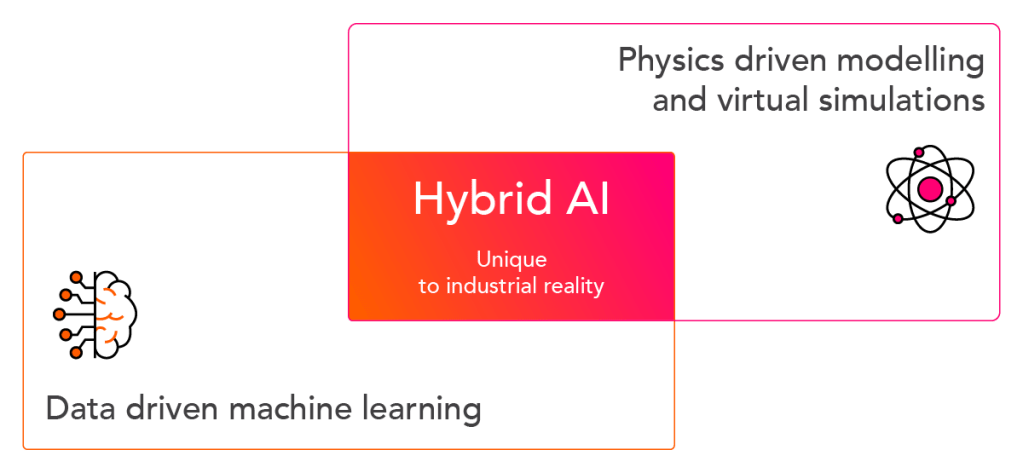
As artificial intelligence (AI) continues its rapid evolution, the integration of hybrid AI models has emerged as a powerful approach, combining the strengths of rule-based systems and machine learning algorithms. This article explores the diverse and transformative applications of hybrid AI across various industries, highlighting how the synergy between rule-based and learning-based components is unlocking new possibilities.
II. Healthcare
II.A Personalized Medicine
In healthcare, AI hybrid models contribute to the era of personalized medicine. Rule-based components ensure adherence to medical guidelines and ethical standards, while learning-based components analyze vast datasets, identifying patterns associated with patient health. This fusion allows for tailored treatment plans, considering individual genetic variations, lifestyle factors, and past medical history.
II.B Diagnostics and Disease Prediction
Hybrid AI plays a pivotal role in medical diagnostics and disease prediction. Rule-based systems provide structured decision trees for explicit scenarios, while machine learning algorithms analyze complex medical data, identifying subtle patterns indicative of diseases. This collaboration enhances the accuracy of diagnostics, leading to early detection and more effective interventions.
II.C Treatment Optimization
In treatment planning, hybrid AI models consider both explicit medical guidelines (rule-based) and evolving patterns in patient responses (learning-based). This approach ensures that treatment plans are not only in line with established protocols but also adapt to individual patient characteristics and the dynamic nature of medical conditions.
III. Finance
III.A Risk Management
In the financial sector, AI hybrid models are instrumental in risk management. Rule-based components establish compliance with financial regulations and industry standards. Simultaneously, learning-based components analyze vast datasets of financial transactions, identifying anomalies and patterns indicative of potential risks. This synergy enables financial institutions to proactively manage and mitigate risks.
III.B Fraud Detection
Hybrid AI contributes significantly to fraud detection by combining rule-based fraud models with machine learning algorithms. While rule-based systems define explicit fraud indicators, machine learning components adapt to evolving fraud patterns, enhancing the system’s ability to detect new and sophisticated fraudulent activities.
III.C Algorithmic Trading
In algorithmic trading, hybrid AI models leverage rule-based strategies for decision-making, guided by predefined market conditions and trading rules. Simultaneously, learning-based components analyze historical market data, adapting strategies to changing market dynamics. This fusion enables traders to make more informed and adaptive decisions in real-time.
IV. Customer Service
IV.A Enhanced Chatbots
In customer service, AI hybrid models transform the effectiveness of chatbots. Rule-based components establish predefined responses for common queries, ensuring accuracy and consistency. Learning-based components, powered by natural language processing, enable chatbots to understand and respond to user queries with nuance, providing a more natural and human-like interaction.
IV.B Sentiment Analysis
Hybrid AI models excel in sentiment analysis for customer feedback. Rule-based systems categorize explicit positive or negative language, while machine learning algorithms discern nuanced sentiments and contextual cues. This collaboration allows businesses to gain deeper insights into customer perceptions, leading to improved products and services.
IV.C Predictive Customer Support
By combining rule-based guidelines for common support issues with machine learning predictive analytics, hybrid AI enables proactive and personalized customer support. Anticipating potential problems based on historical data, the system can offer preemptive solutions, enhancing the overall customer experience.
V. Manufacturing
V.A Predictive Maintenance
In manufacturing, AI hybrid models revolutionize predictive maintenance. Rule-based components define explicit maintenance protocols, while machine learning algorithms analyze sensor data to predict equipment failures and recommend maintenance schedules. This collaboration minimizes downtime, reduces costs, and optimizes the efficiency of manufacturing processes.
V.B Quality Control
Hybrid AI contributes to quality control by integrating rule-based inspection criteria with machine learning image recognition. While rule-based components define specific quality standards, machine learning algorithms analyze visual data, identifying defects and anomalies. This combination ensures high precision in quality assessment and defect detection.
V.C Supply Chain Optimization
AI hybrid models optimize supply chain management by incorporating rule-based decision-making with machine learning-driven demand forecasting. Rule-based systems define explicit supply chain guidelines, while machine learning algorithms analyze historical data and external factors to predict demand, reducing excess inventory and enhancing overall supply chain efficiency.
VI. Legal
VI.A Contract Review
In the legal domain, hybrid AI is utilized for contract review. Rule-based components provide structured guidelines for contract analysis, ensuring compliance with legal standards. Simultaneously, machine learning algorithms process large volumes of legal documents, identifying relevant clauses and potential risks. This synergy accelerates the contract review process while enhancing accuracy.
VI.B Legal Research
Hybrid AI models contribute to legal research by combining rule-based legal principles with machine learning-driven data analysis. Rule-based components guide the system’s understanding of legal frameworks, while machine learning algorithms analyze vast legal databases, identifying relevant precedents and trends. This collaboration empowers legal professionals with comprehensive and efficient research capabilities.
VI.C Case Prediction
In predicting legal case outcomes, hybrid AI leverages explicit legal rules and historical case data. Rule-based components define legal criteria and precedents, while machine learning algorithms analyze patterns in case data, predicting likely outcomes. This fusion assists legal professionals in strategic decision-making and resource allocation.
VII. Challenges in Implementing Hybrid AI
VII.A Integration Complexity
Integrating rule-based and learning-based components in hybrid AI systems poses challenges in terms of system architecture and design. Achieving seamless integration requires careful planning, collaboration between domain experts and data scientists, and a robust technological infrastructure.
VII.B Striking the Right Balance
Finding the right balance between rule-based and learning-based components is crucial for the success of hybrid AI models. Overemphasis on rules may lead to rigidity and limited adaptability, while excessive reliance on machine learning may result in a lack of interpretability and control. Striking the right balance requires a nuanced approach that considers the specific requirements of the problem domain.
VII.C Data Quality and Quantity
The effectiveness of learning-based components in hybrid AI models heavily relies on the quality and quantity of training data. Insufficient or biased data can impact the model’s performance and generalization capabilities. Ensuring a diverse and representative dataset is a continuous challenge in the development and maintenance of hybrid AI models.
VIII. Future Trends in Hybrid AI
VIII.A Explainable AI in Hybrid Models
The demand for explainable AI continues to grow. Future trends in hybrid AI models are likely to focus on enhancing interpretability. Ensuring that both rule-based and learning-based components contribute to transparent decision-making will be crucial for gaining trust and acceptance in various domains.
VIII.B Autonomous Hybrid Systems
Advancements in autonomous hybrid systems are anticipated. These systems will leverage learning-based components for adaptive decision-making and rule-based components for explicit reasoning. The goal is to create AI models that require minimal human intervention, especially in scenarios where continuous learning and adaptation are essential.
VIII.C Personalized Hybrid Systems
Personalization is a key trend in AI applications. Future hybrid AI models may evolve to provide more personalized experiences by integrating learning-based components that adapt to individual user preferences, behaviors, and contexts, guided by predefined rules for ethical considerations.
IX. Conclusion
In conclusion, the applications of hybrid AI models are vast and transformative, touching upon various facets of our lives and industries. The synergy between rule-based and learning-based components unlocks new possibilities, offering solutions to complex problems and enhancing decision-making across diverse domains. As technology continues to advance, the trajectory of hybrid AI points towards a future where intelligent systems seamlessly blend explicit reasoning with adaptability, providing innovative solutions and reshaping the landscape of AI applications. Embracing the potential of hybrid AI is not just a technological choice; it’s a gateway to a more intelligent, efficient, and personalized future.
 Future of AI
Leave a comment